Time to Care. A shared picture of home care.
An older person wants to keep living at home. Their care team needs the time and information to support them. Time to Care brings care planning, home observations and staff training into one connected service.
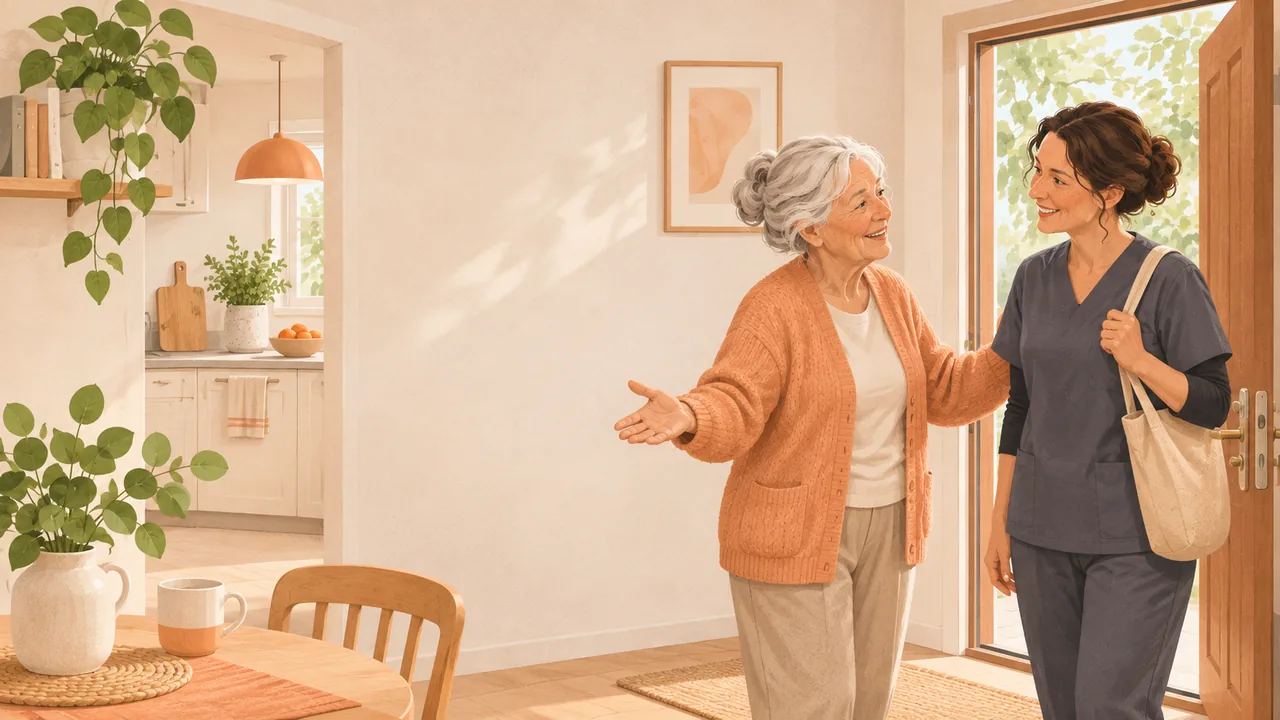
Care should continue from one visit to the next
A home-care worker finishes a visit and the next colleague takes over. If the care plan, visit notes and information from home are in separate places, that colleague must rebuild the picture before deciding what to do.
Time to Care brings together three partners within Estonia’s Welfare Technology Program: SilverWise for care planning and documentation, Guardian for home sensor observations, and Lumilaane for staff training. Together, they help municipal teams connect information with day-to-day care.

One service, three connected parts
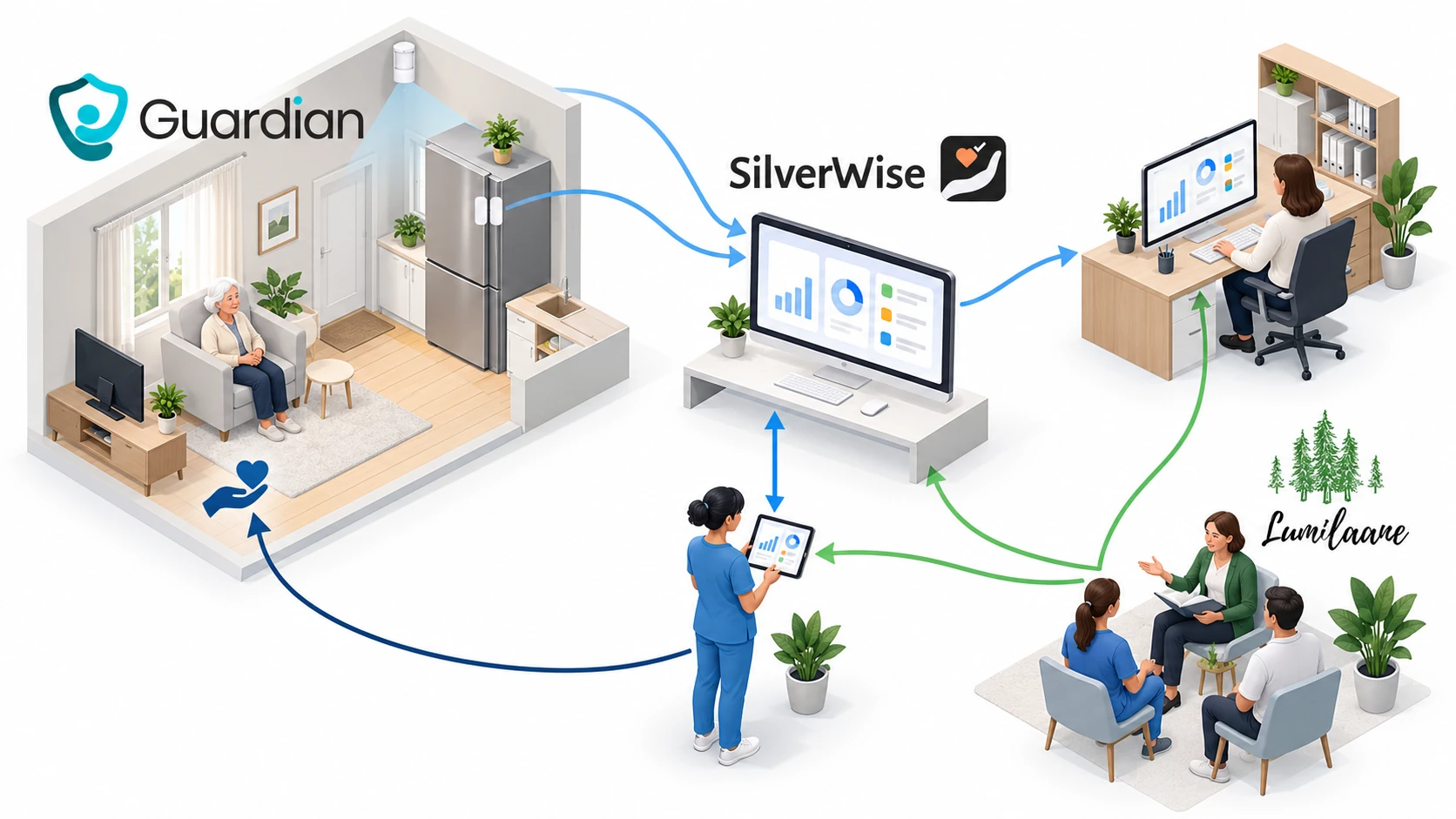
- Guardian
- Home sensors help the team notice changes in a person’s everyday routines.
- SilverWise
- Care plans, visits and follow-up give the team a shared picture.
- Lumilaane
- Staff training connects the technology with everyday care practice.
A shared picture for the care team
SilverWise brings client records, care plans and daily coordination into one working environment. The planned Guardian integration adds home observations to help the team decide what needs attention.

Plan around the person
Keep client information and care plans together, giving each visit a clear purpose.
Keep continuity
Record what happened and what needs follow-up so the next worker has the context.
Make informed decisions
Review relevant home observations alongside care records and professional judgement.
From a home observation to a care decision
The planned workflow combines home observations with professional judgement and clear responsibility for follow-up.
- Guardian provides information from home sensors.
- Relevant observations are brought together with care information.
- The care team reviews the context and decides on follow-up.
- Care activities and observations are documented for continuity.
Building on the first stage
- 20+
- municipalities interviewed
- 4 / 4
- positive municipal platform tests
- Pilot-ready
- sensors and training preparation
Development findings reported in the project’s first-stage presentation, ahead of a wider pilot. Welfare Technology Program: Time to Care (English PDF)
What a pilot needs to establish
A pilot needs to establish who reviews observations, who contacts the person and how follow-up is recorded. It should also test whether the combined service fits daily work and reduces avoidable administration.
Project partners








Estonia’s Welfare Technology Program
The Ministry of Social Affairs’ initiative supports technology that helps older people and adults with support needs live more independently, while reducing pressure on caregivers. Tehnopol, Civitta and the Estonian Academy of Arts deliver the program.
Municipalities, service providers, researchers, technology companies and service users develop solutions together. The program covers remote care, social participation and digital tools for care workers.
Service concepts are developed before testing, evaluation and adoption. Time to Care contributes a connected home-care model combining software, sensors and staff training.



The program is co-funded by the European Union. See the official sources for funding terms and application information.
Discuss home care in your municipality
Talk to us about care planning, documentation and connecting technology to an accountable care workflow.